





You’re setting up your first podcast, streaming rig, or home studio. You’re excited. Then you start looking into mics and boom.. condenser vs dynamic mic debates everywhere.
One Reddit post says condensers are studio magic. Another YouTube comment insists dynamics are the only way for beginners. You’re more lost than before.
But don’t panic. Picking a condenser mic over a dynamic mic isn’t about which one’s “better.” It’s about what fits your space, your budget, and how you actually record. Let’s break it down.
What is a Condenser Microphone?
A condenser microphone is a type of microphone that uses a capacitor to turn sound into electrical signals.
This internal capacitor has a lightweight diaphragm suspended near a fixed backplate, which creates an electrostatic charge when powered.
Because the diaphragm is so light, it responds almost instantly to sound pressure. That gives the mic a fast transient response.
A condenser microphone can capture high-frequency detail, unique vocal textures, and a touch of room ambience with accuracy.
That’s great for a detailed sound. But its sensitivity also means condenser mics pick up more background noise like computer fans, keyboard clicks, and room echoes.
In general, condenser microphones split into two main groups by diaphragm size:
- Large Diaphragm Condensers, like Neumann U87 or Audio-Technica AT2020, are ideal for capturing a voice’s full body and warmth.
- Small Diaphragm Condensers, like AKG C451 B, excel at the sharp high-end detail of acoustic instruments.
What is a Dynamic Microphone?
A dynamic microphone is another type of microphone known for its ruggedness, self-powered operation, and its ability to isolate sound.
Unlike fragile electronics, a dynamic mic uses a simple setup: a voice coil attached to a diaphragm in a magnetic field generates its own electrical signal.
This design gives creators two big advantages. First, it’s completely passive. It runs without power.
No batteries, no charging, no phantom power.
Plug in an XLR cable to your interface and it works right away. That’s what makes it the ultimate plug-and-play professional tool.
Second, it’s built like a tank. A dynamic mic is built from heavy-duty metal and composite materials that endure physical abuse, moisture, and drastic temperature swings.
Drop a dynamic mic like the Shure SM57 from shoulder height onto concrete, and it will likely still work. Try that with a condenser microphone.
For content creation, the heavy voice coil does one more job: noise rejection. It’s less sensitive to distant air movement, so it naturally ignores room echo, computer fan noise, and keyboard clicks.
Dynamic mics come in two types:
- Broadcast models — Heavy, stationary mics like the Shure SM7B or Electro‑Voice RE20. Top YouTubers and podcasters use them to achieve a deep, isolated “radio voice” even in untreated rooms.
- Handheld models — Mics like the Shure SM58, designed to be held, dropped, and used for loud live performances without distortion.
Condenser vs Dynamic Microphone: Key Differences
These are the differences between condenser mics and dynamic mics:
1. Total Cost of Ownership
This is the first filter for creators when it comes to condenser vs dynamic mic.
A dynamic XLR mic works with almost any entry-level interface, while condenser XLR mics need phantom power, which most budget interfaces around $60 now have.
USB mics cost around $50 for plug-and-play dynamic or condenser. In XLR setups, the real difference comes from the needed gain and the chosen accessories.
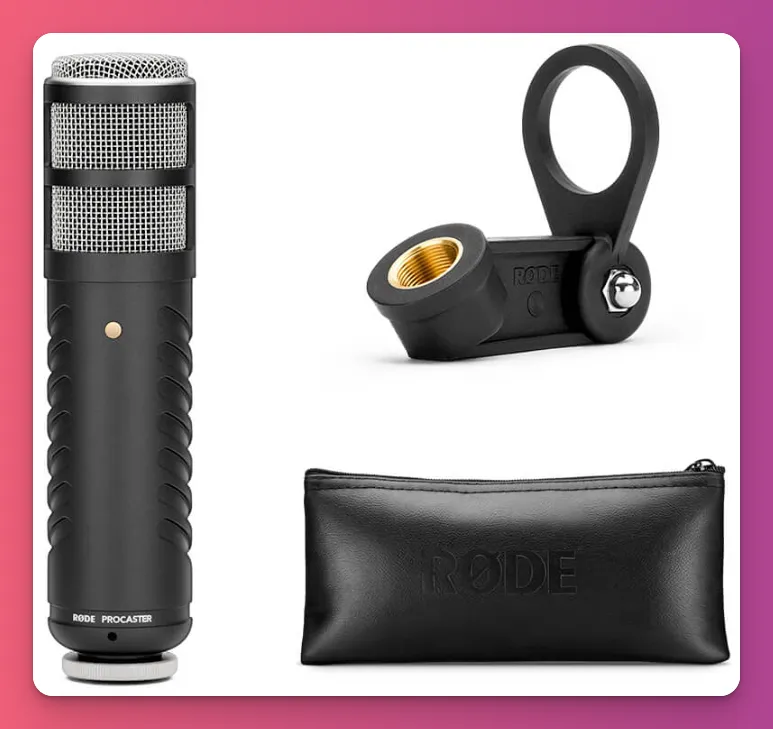
Take the Rode Procaster, for example. It’s around $225 and often needs a mic booster, like a $129 Cloudlifter, or a solid interface to boost its weak signal without adding noise.

On the flip side, the Audio-Technica AT2020 is $99. Pair it with a $169.99 Focusrite Scarlett Solo, and your whole condenser setup comes to $249.
Just remember, those extra condenser costs can pile up: shock mounts ($15–$50), pop filters ($10–$25), and cases ($30–$80).
Plus, condensers are more fragile. Drop a $300 condenser, and you might wreck the diaphragm. Dynamic mics, on the other hand, don’t need many accessories and can handle most accidents.
2. Pickup Isolation
Pickup isolation is basically how your mic focuses on your voice and ignores background noise. This is a big difference between condenser and dynamic mics.
A dynamic mic is good for pickup isolation because its parts are heavier and not as sensitive. It needs a loud sound right up close to start recording.
That’s why the Shure SM7B is the mic gamers usually go for. It blocks out keyboard noise right below it, but your voice still sounds rich.


How about condenser mics? They pick up more than just voices. Their gold diaphragms are like a sensitive net for all the air vibrations.
A dynamic mic might miss a bird chirping outside, but a condenser mic, like the Neumann TLM 103, will catch it loud and clear.
If you record in a noisy room, condenser mics can be tricky. Their sensitivity makes your voice bounce off hard surfaces, so the room sound or echo stands out more.
That’s why big studios have thick walls. They need a quiet room so the mic can pick up all the tiny vocal details without hearing your fridge hum from the next room.
3. Power Requirements
Yes, the two types of microphones handle electricity in totally different ways to get your voice into a computer. And this is an important part of the difference between dynamic and condenser mics.
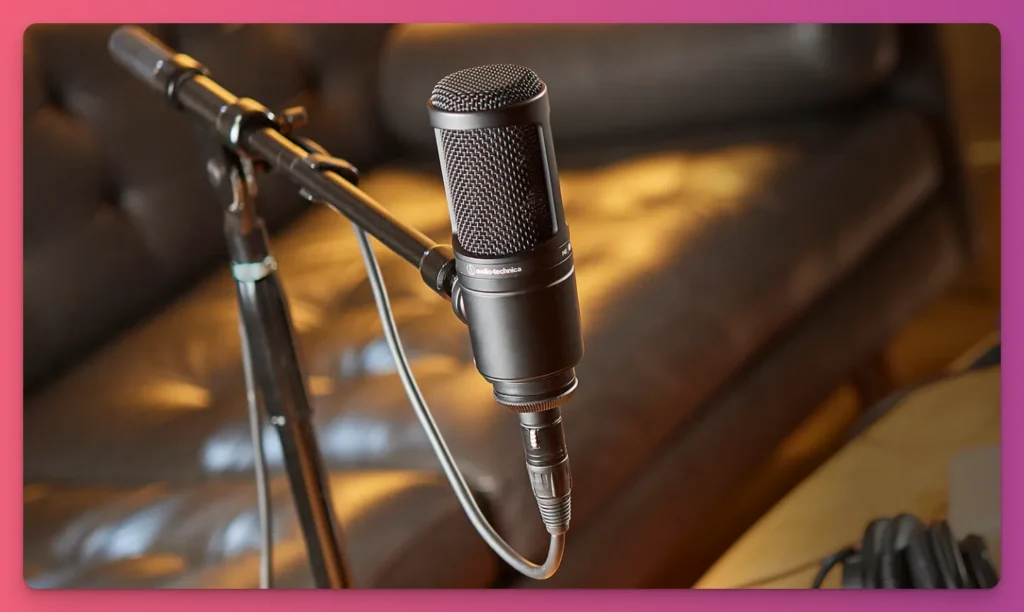
A condenser mic, like the Audio-Technica AT2020 or the pricier Rode NT1, needs its own power to pick up your voice. It’s called phantom power, and you’ll usually see a +48V button on your gear.
If you don’t flip that switch, your XLR condenser mic won’t work, and you won’t hear a thing. This can trip up new creators who think a mic should just work when they plug it in.

On the other hand, dynamic mics make their own electricity using a magnet and wire to turn sound into a signal.
A great example is the Shure SM58. It’s known for working perfectly without any buttons or batteries. You just plug it in and go.
But, some pro mics, like the Shure SM7B, make a weak signal on their own. So, they usually need a little help from a Cloudlifter or a preamp.
Even though the mic itself doesn’t need special power, the part that boosts the sound does. So, you’ll still need an interface that can give it that power in the end.
4. Construction
Your mic’s durability matters. It’s the difference between a $50 fix and a $300 replacement if you drop it. Plus, it makes you feel way more confident using your equipment.
And the thickness of the diaphragm is key here. Dynamic mics have thick diaphragms made of composite material. Condenser diaphragms, on the other hand, are super thin, only 2–5 microns.
Impact damage differs. If you drop a dynamic mic from 3 feet onto a hard floor, it’s likely fine. If you drop a condenser from the same height, you may dislodge delicate internal electronics.

And this also affects how you feel. It’s easy to worry about dropping your microphone. So, you pay more attention to keeping your equipment safe instead of making awesome videos.
With dynamic microphones, you can focus more on what you’re doing, whether you’re playing video games, making vlogs, or performing live music on YouTube.
5. Maximum SPL Handling
SPL stands for Sound Pressure Level. It’s how loud your mic can get before it starts distorting.
If you’re a content creator, knowing this limit helps. If you want to record loud sounds like full-on music or high-energy talking, you need a mic that can handle it without clipping.
Condenser mics are usually more sensitive, so they can’t deal with super loud noises.
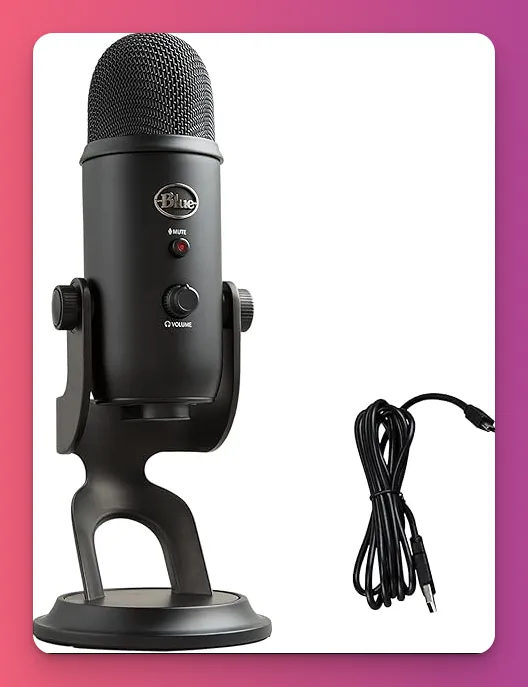
Take the Blue Yeti, for example. It can handle up to 120 decibels. That’s fine for normal talking, but if you scream right into it, it might have trouble.

Dynamic microphones handle loud sounds way better because their internal parts are built tougher.
A professional broadcast microphone like the Beyerdynamic M70 PRO X is built to handle loud speech and ambient noise without the audio breaking up.
Many dynamic mics are so robust they handle volumes over 150 dB, louder than a jet engine. This makes them a safer pick for creators who tend to get very loud during recordings.
6. Frequency Response
Condenser mics capture a wider frequency range, recording sounds across the full human hearing spectrum with great detail.
That’s why a condenser mic like the Sony C-80 is great at grabbing the high-frequency sounds that give a voice its air and crispness.
This condenser mic delivers life-like, detailed recordings with tiny mouth noises and breaths that make a podcast or voiceover sound professional.


Dynamic mics have a narrower, tailored frequency range because their heavier parts can’t move fast enough for really high pitches.
They often roll off the high end, so the top pitches come out quieter. It makes the sound less crisp but tougher in the middle, where most of a human voice’s power sits.
This might not sound as detailed as a condenser, but creators with a naturally sharp voice often prefer it. The mic’s limited frequency range helps smooth out harsh sounds.
Related: Best Podcast Equipment for Beginners
7. Acoustic-to-Electric Conversion
When it comes to condenser vs dynamic mic, you’ll see that the acoustic-to-electric conversion is one of the key differences between the two.
Dynamic microphones use electromagnetic induction. Sound makes the diaphragm move, the attached coil goes through a magnetic field, and that motion makes electrical current.
Condenser microphones rely on electrostatic principles. Sound makes the diaphragm move, changing the gap to the charged backplate and changing the capacitance.
That small change needs more help, so there’s an internal impedance converter and phantom power. The change is electrical like what happens to Shure PGA27.

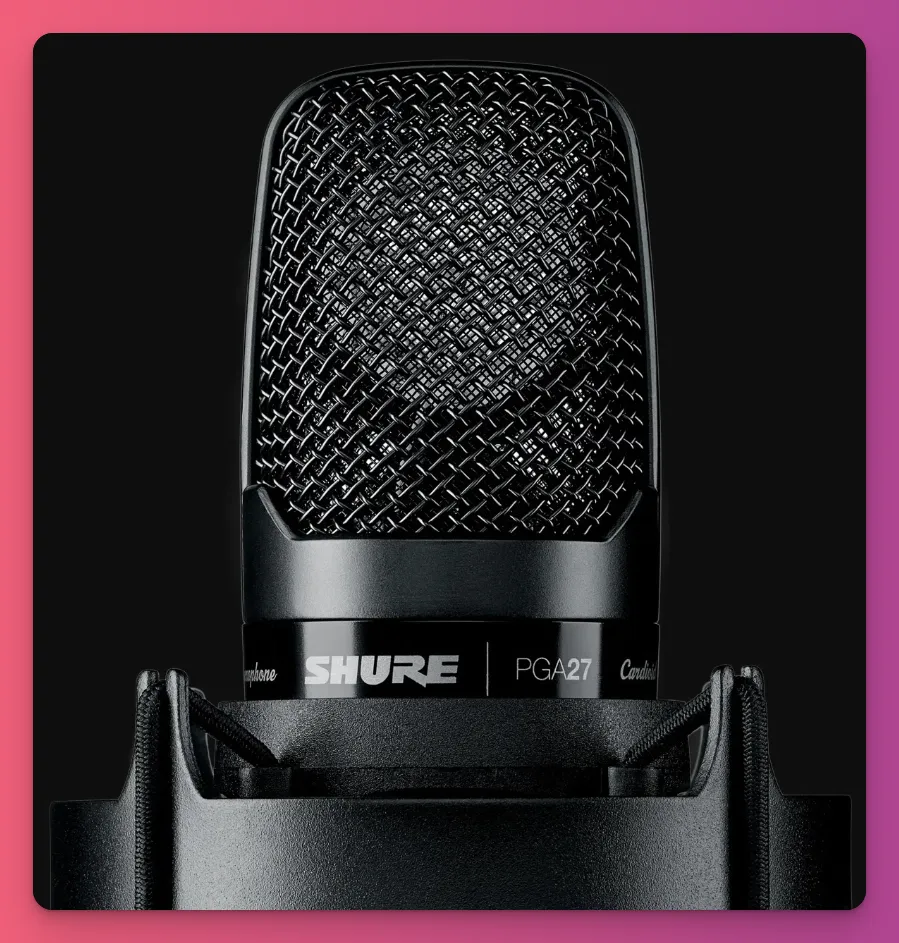
As a content creator you need to know this. The electro-static conversion in a condenser is built for precision. The electro-magnetic conversion in a dynamic mic is built for reliability and focus.
8. Output Level
When it comes to dynamic mic vs condenser mic, the output level also matters.
A condenser mic typically runs at about -32 dBV, which is a loud signal. A dynamic mic is weaker, near -54 dBV.
Because these numbers are negative, -32 dBV indicates a stronger signal that needs less help from your equipment to sound loud and clear.
Why they differ? Condenser capsules produce higher voltage variations, handled by internal impedance-converting electronics.
That’s why a mic like the AKG C214 sounds loud the moment you plug it in, while dynamic mics like the Sennheiser e935 send a much fainter signal down the cable.

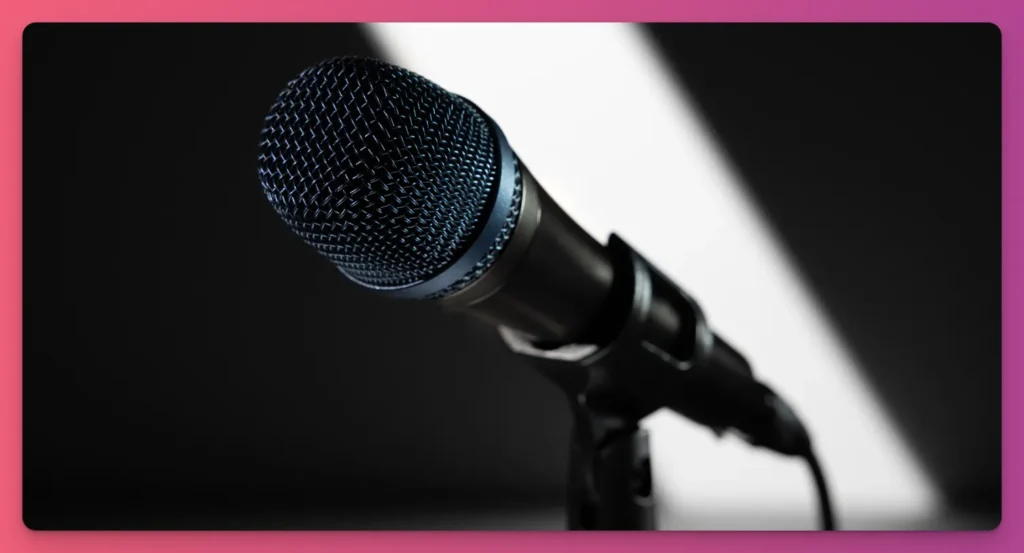
For content creators, if you go with a dynamic mic, you’ll need to boost the gain on your interface. And if your gear isn’t high-end, turning the gain that high can add a loud hiss in the background.
9. Self-Noise Floor
Self-noise is the hiss a microphone makes by itself. If a mic has a high self-noise floor, your recordings carry a distracting background shhh.
This matters for podcasts, ASMR, or subtle voiceovers with no music to hide the mic’s own electrical hum.
Condenser mics typically run about 10–15 dB SPL, while dynamics sit around 20–25 dB SPL.
That 10 dB gap means you hear a quieter background between sounds. ASMR creators recording 10 seconds of silence between triggers notice the difference.
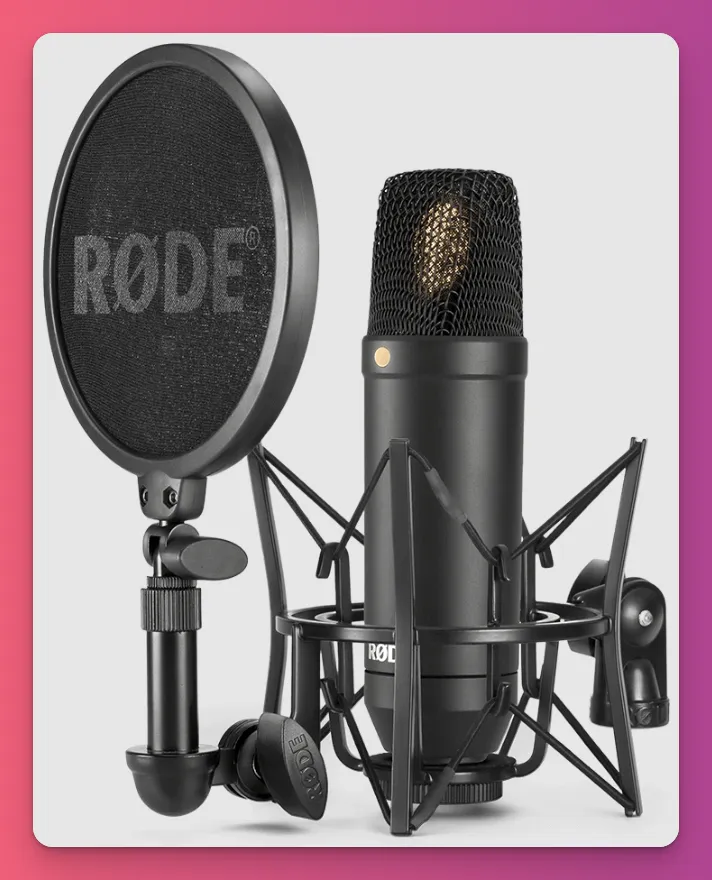
If this matters, look for quiet mics like the Rode NT1, which is known for low self-noise, about 4 decibels.

Related: How to Make ASMR content
Condenser Mic vs Dynamic Mic: Who Wins?
There’s no universal winner. It comes down to your setup and how you’ll actually use it. Think about the content you create.
If you’re in a noisy, untreated bedroom, dynamics save time and frustration. In a quiet, treated space, condensers reveal stunning vocal detail.
Most beginners benefit from starting with a dynamic. They’re durable and cheaper. The best advice? Start with the mic type that fits your current space, not your future dream studio.
That’s it for now. If you like this article and want more tips and tricks for content creators, you can subscribe to Gank’s blog.
FAQ About Condenser vs Dynamic Mic
How to tell if a mic is dynamic or condenser?
You can always check the mic specifications or product page. It’ll tell you the mic type. And if it says it needs phantom power, then you’ll know that it is a condenser microphone.
Which type of mic is best for vocals?
For treated studio vocals, use a condenser mic to get the most detail and clarity. For untreated bedroom vocals, use a dynamic mic to reduce background noise and echo from the room.
Which microphone is better for recording in a noisy room?
Dynamic microphones work better in noisy rooms. They have lower sensitivity, so they naturally reduce background noise.
Condenser mics are designed to be extremely sensitive. They are far more likely to capture unwanted room echoes and PC fans that a dynamic mic would miss.
If condensers are better quality, why don’t everyone just use them?
Honestly, condenser mics aren’t always better. They’re just more sensitive. They pick up detail in quiet studios, and they catch every background noise in untreated rooms.
Condensers cost more upfront, need phantom power, and are fragile. Dynamics are affordable, and work well in real-world recording rooms where most creators record.